Hard lessons of farming (An homage to Peepers)

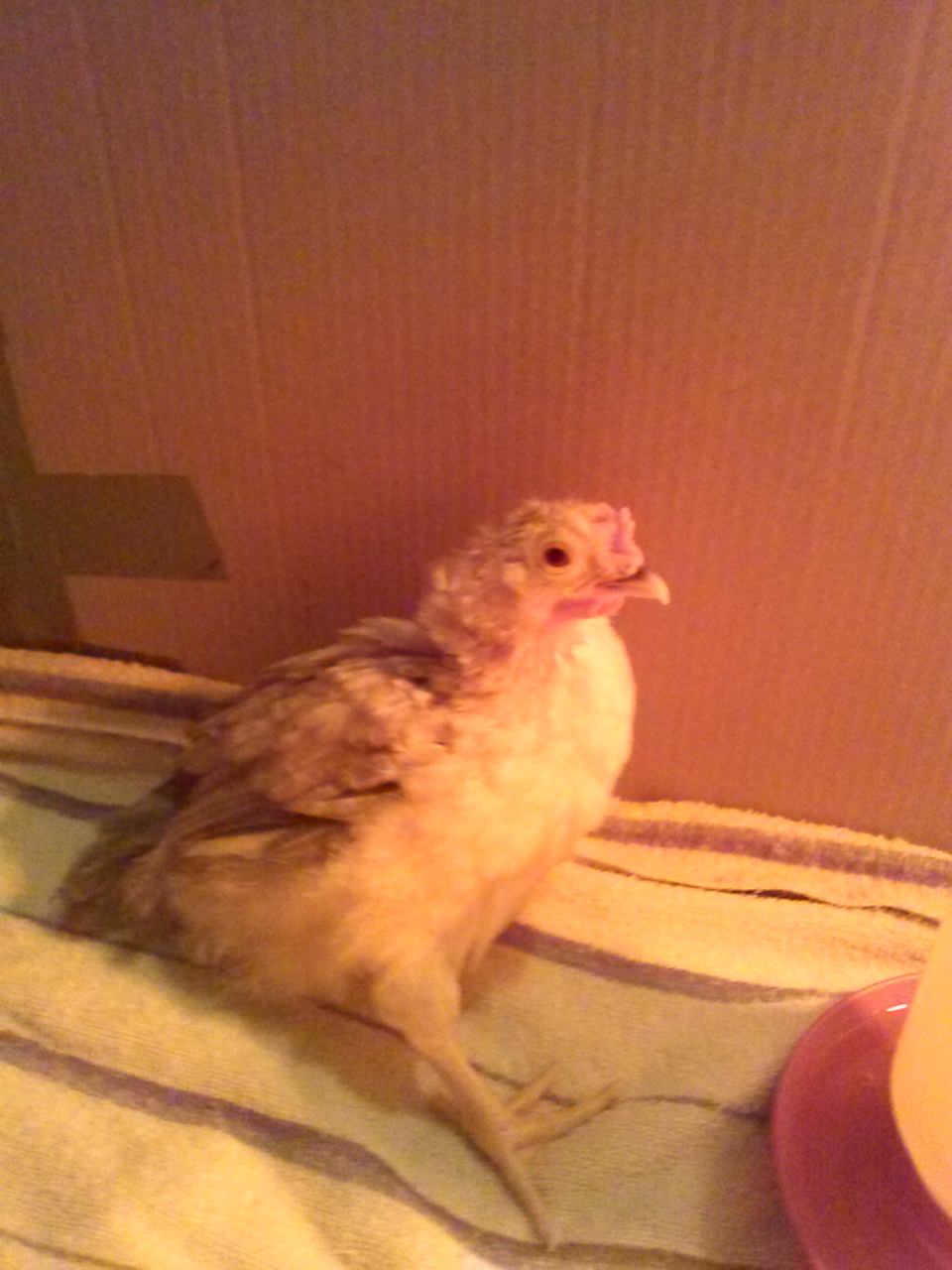
Peepers in early March

Sometimes on a farm you have to make hard decisions.   This weekend we made a really hard decision.  If you’ve been reading my posts, you know that Peepers had some leg problems.  I didn’t discover them until it was too late to do anything about them (IF I had been able to do anything at all).  We thought that she would be ok, because for a while she was able to get around on them fine, but as she grew larger, her body weight was too much for her legs.  (if she was a girl – I still have no idea).  The last several days she was also panting a lot, and I noticed that she was using her beak to help her move around, and she would also  flap her wings trying to move around.  One leg was splayed out almost completely behind her, with the foot on that leg also being misshapen – it was I think what they call “duckfoot.”  She couldn’t put that foot down completely to push her body so that the other leg could help her move.

When we first got the other chicks, a couple weeks ago, seeing them running around made me realize just HOW disabled she was.  I agonized over the best thing to do for her, and then we decided to just wait.  We decided to not make a decision about her for the time being, because we thought she was enjoying her life.  But for most of last week, we could tell she was just very frustrated, and possibly in pain.

We tried thinking of other solutions – maybe housing her away from the other chickens later – since putting her with them would be cruel – they would just peck her to death because of her disability.  We thought about keeping her in the house, but she would have had to have a chicken diaper; and  probably be caged, to keep her safe from our dogs, and also because she really couldn’t move around anymore.  I think that as she grew bigger it would just get worse and eventually she wouldn’t be able to move at all.  We thought about giving her to other people, but like I said she’d end up being caged, and that is not the life I wanted for her.

We decided on Saturday night that the nicest thing for her would be to humanely end her suffering.  We did it as quickly and humanely as possible.  And it was very hard to do, emotionally, because I’d bonded with her.   As a farmer, (or budding farmer), I need to get over the emotional attachment thing.  The case with Peepers, as opposed to my other chickens, was a lot different because she’d been alone for so long, and I had hand raised her.  When I think of my other chickens (both the adults and the new chicks), there isn’t that bond there because they have each other.  To me they are all just “the chickens,” they don’t have names, they aren’t pets.  I didn’t mean to get that attached to her, but I did.  I don’t know if the bond went both ways, but I was attached to her.  I don’t raise my chickens specifically for meat, but at some point I’ll have to cull some for meat and/or to thin the herd, remove mean roosters, etc.   I can’t get attached to them.  I feel really bad but I think this was the best thing we could have done for her.

She was a great little chicken.  She got to live a comfortable life for her two months that she was here (or as comfortable as I could make it).  She had a really cool personality.  I am very sad that it had to end this way, but I think it was for the best.

RIP Peepers. You will be missed.

* And if you are wondering, no we did not eat her.  Even if she had been big enough, we would not have.

Waiting (and getting ready for) spring

A crocus in our yard from last spring

Winter has seemed pretty long, even though we are having a relatively mild winter this year, here in the U.P.   We have a lot of snow, although definitely not as much as last year, and it doesn’t seem like we have as much as I remember us getting when growing up here.  The temps are still pretty harsh, but at least we get breaks in between the REALLY cold days  (if you can call 15-20 degrees above zero a break – I do).  This is always the time of year that everyone is tired of winter and just ready for it to be over.  Just like most gardeners, I have been busy planning my garden for this spring.

I went all out with my planning for this year.  In the past I usually have not been as organized – I usually plan some,  but get a lot of stuff spontaneously later in the spring.  I’m mostly used to gardening down in lower Michigan, but the Upper Peninsula has a shorter growing season.  Our winters can be 6-8 months long (I have actually heard of snow in July here, although I don’t remember ever seeing it).  I have grand plans of canning a lot of food for next winter, so I want to have everything ready, and make sure I have enough time to harvest everything – and have it all grow in time to be harvested.  I learned a few things about this the hard way last year – I put in Tomatillos in July (they were just over pea sized by the time everything else was dying for the fall).  I had a pumpkin plant that only produced one very small pumpkin, because they need 110 days – I just don’t have that long here.   My tomatoes would not ripen on the vine – I ended up bringing them in and ripening them in a sunny window. (My mom said something about cutting the suckers off the plants to ripen them, which I’ve never had to do – the tomatoes I was growing didn’t seem to have these “suckers” that I could find).

I went through my box of seed packets that I already had – some were leftover from previous years, and some were new “on sale” seeds I bought last fall. I figured out what I wanted to grow from those, and I looked online to see how long different kinds of seeds can last.  Depending on the plant, seeds can be viable anywhere from 2 to 5 years.  I actually had some really old packets from 2007/2008 – those got tossed.    I ended up with a decent assortment of vegetables and flowers, but there were things I wanted to try this year that I needed new seeds for.  So I got to ordering.

Last summer I got a nice catalog from a company called Horizon Herbs, and their catalog had lots of really good information about their seeds and a good variety of vegetables, herbs and flowers.  So that is where I ordered my new seeds.  They had some different “Ancient Grains” seeds, so I am going to try to grow Amaranth this year – it’s supposed to be good cooked up as an oatmeal kind of thing, and for bread.  And I figure if we don’t end up liking it, the chickens probably will.   I also found out that artichokes can grow as an annual, so I’m going to try to grow some – I don’t know how big the artichokes will actually be, but it’s worth a try.

I was careful when picking seeds out, from both my old supply and the new order, to make sure they are shorter maturing varieties.  I have some white corn seeds that are 90 days, and I found one (yellow corn) from Horizon that needs  70 days (called Fisher’s Earliest).

I had made a rudimentary drawing before my order, but then because of some things not being available, and some changes to what I decided to grow, I redrew it. The new drawing actually plans for how big everything will get, and also has space so that we can actually walk between plants.  (My son got mad at me last year trying to get around in our garden because it was a jungle without actual pathways between plants. He’d get trapped behind tomatoes trying to get to the zucchini).

garden plan
Here is my main garden plan for this year.

The plan above is actually only one bed – a new one I’m planning.  We built a fenced-in area for our dogs last year, and this will go next to it, utilizing one wall of fencing from the dogs’ area. I didn’t have space to draw it as one big 10×30 grid, so the drawing is split in half, side by side. I drew it on graph paper, making each square foot of the garden = 4 graph paper squares (so I could actually write names of plants in).   I have another bed that will have acorn squash and watermelon, and onions, and some other stuff.

I also ended up ordering a few fruit plants for this year – raspberries and strawberries and elderberries – I’d like to try to make elderberry wine.

One other thing about gardening where I live is that I definitely need to fence it in.  We have deer that will hop anything less than an 8 foot fence, I’ve been told.  My garden last year was left alone by animals though, even though my fencing was pretty crude –  I only had a 4 foot fence and it was made of old fence scraps I found around the yard (we didn’t have money at the time to buy new fencing).  I found some snakes and toads in there (they helped me with bugs), but I never saw evidence of rabbits or deer. For this year we have some leftover 5 foot fencing (from making the dog fence in the fall) that I believe will be enough to close in the new garden bed – I’m hoping the fact that my dogs run around a lot in their enclosure, actually next to both gardens, will help to deter deer from jumping in.

Now I just have to wait for all my new seeds, and spring to get here!

Attempt at chicken fodder

I’ve been reading a lot about fodder systems lately for livestock feed – essentially you have a setup where you sprout a lot of seeds of barley or some other food grain, and it grows mats of grasses for the animals to eat.  There are some big farms that have larger scale fodder systems, and some people have set up diy fodder systems that seem to work well.  I don’t have a lot of space at the moment, but I wanted to see how this would work for my chickens. I started with a large plastic food container, and I also have a seed sprouter (for sprouting alfalfa and bean sprouts) that I figured I’d use.  I bought the sprouter several years ago, and some seeds to sprout, but then never actually grew the sprouts.  So I had a lot of seed to work with.  In the large plastic container I threw some bird seed that our wild birds outside want nothing to do with (they are picky and will only eat black sunflower seed).

My container with birdseed to sprout
Seed sprouter
Seed sprouter

I wasn’t sure if the chickens would really be interested in this – usually they’ll eat anything though, so I figured it was worth a try.  One of the seed trays from the sprouter ended up having large sprouts right away – they weren’t growing in a mat yet, so I dumped them into a little plastic container and just set that on the floor of the chicken house. They went nuts for it.  I’m still growing the large container, it has some sprouts but is not yet a mat of sprouts.  You need to rinse the seeds/sprouts in cold water a couple times daily to keep mold from forming and to keep the sprouts healthy. I don’t have holes in that container, I just swish some water in and slowly dump it out, so I don’t know that it will actually grow into a mat since they swish around so much.   I’m getting a lot of sprouts though, it should be ready in a couple days.

tiny sprouts
tiny sprouts

My other tray from my seed sprouter should be ready pretty quickly too:

These are lentil sprouts

I’ll have to see if the chickens like the rest of these – if so I’ll try to devise a better system later this spring.  There are tons of diy fodder system ideas on the internet.  The best way would be to have bigger trays with holes for water to drain, and several trays going so that you always have fodder.  If I can get a system going this works for rabbits and other animals too – I’ve seen online where some people feed their goats and cows from sprouted fodder. I’d love to be able to grow most of my animal feed on my own instead of buying bags of feed all the time, or at least be able to cut down on store-bought feed.

Keeping farm logs

A giant sunflower
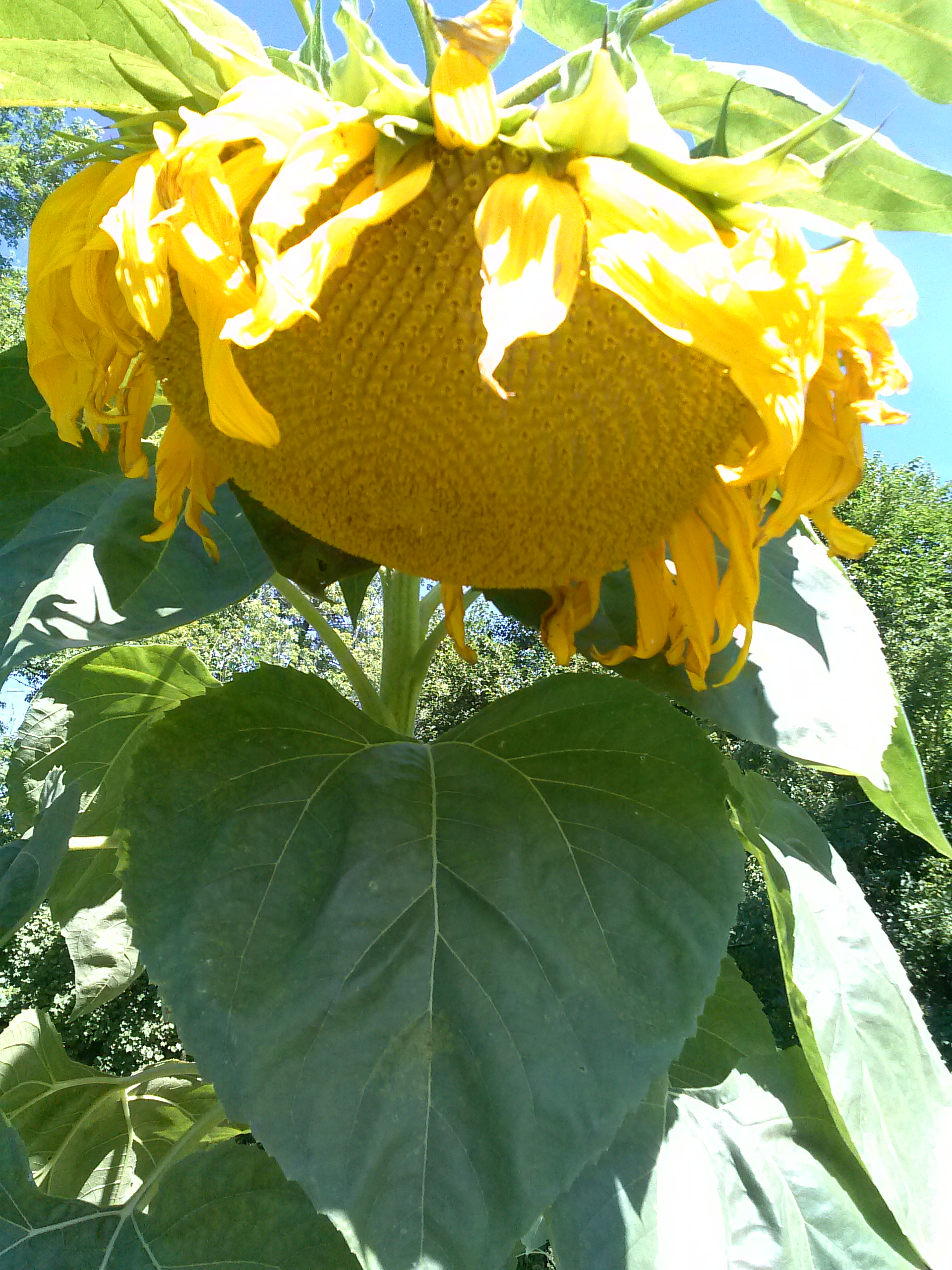
A giant sunflower (grown in 2013 at a previous house).

It’s a good idea to keep records of things.  With our minifarm, we started keeping logs right from the beginning – I got the idea from my aunt and uncle.  They have a huge garden each year, and they keep records of their harvests of each vegetable they grow.  That way they can compare harvests from year to year.

Since 2014 was our first year here, our garden wasn’t that large yet, but I kept a harvest log.  Each time I’d pick something, say zucchini or cucumbers, I’d keep a tally of how many I got.  For this first year I just tracked individual items – for instance, I got 49 tomatoes, and 132 green beans.  Hopefully this next summer I’ll start tracking pounds or bushels or something – I hope to get a lot more beans this year.

Keeping track of harvests can show you where you had problems – either you need to grow more the next year, or there may be something that didn’t do so well and you can decide if you just need to adjust things, or if it just won’t grow in your garden.  For example, I tried to grow Swiss Chard in pots on my front porch.  We didn’t get much chard – there is some afternoon sun that would hit them, but they needed to be watered all the time.  We get a lot of rain here but the rain couldn’t get to them because of the porch overhang.  So next year, I will grow it in a new garden bed I’m planning.  I also grew a few cabbage plants last year.  We like cabbage on occasion, but it’s not my family’s favorite vegetable anyway.  Which is good because cabbage moths laid eggs all over them.  I was picking off cabbage worms from each plant, and they had devastated a few before I realized what was happening.  I fed the cabbage worms to my lizard and the chickens. They all loved them.  And then the cabbages ended up going to the chickens as well since they were pretty gross.  I won’t be growing cabbage this year.  If I grow any of that family, I’ll need to use row covers to keep the moths off and also move them somewhere else in case there are eggs still in the soil.  I noted all this in my garden log.  That way I don’t forget in a few years and then try to grow cabbage (or brocolli or any other brassica) without a plan.

I keep my farm / garden log in a big 3 ring binder.  I put notes about the plants, and about weather, and about different things I wanted to remember about the season. I noted when we got our first hard frost, and I’ll note when we finally get rid of the snow this year.  When I find good articles about farming or gardening that I want to keep I’ll print them and put them in there.  I also have my 2015 garden planned out in there.  I got some graph paper and used that to plan a new garden bed and also to expand the one I used last year.

Another good thing to keep track of with my chickens is their egg production.  I started keeping track from the first egg they laid on October 19th.  We got 338 eggs in 2014.  Just from my 9 hens, in less than 4 months.  Keeping track of eggs can help you realize where you’re breaking even, or if you are actually making a profit from your eggs.  Even if you don’t sell any, you should make a “profit” against your food costs, by not having to buy them at the store anymore.   With our food costs we still made a small “profit.”  Good thing my family loves eggs.  I also note when the eggs are laid in weird spots, or if we have a broody hen, or once when we had a couple of eggs with thin shells.

Keeping a garden or farm log is a smart idea, and helps you keep track of what worked and what didn’t from year to year.