Updates – Maple, Mushrooms, and Growing Chickens

Our maple syrup making adventure is over for the year – It’s still prime collection season but we were having trouble cooking it all up inside the house.  We have a propane-gas stove, and propane is not cheap.  Plus I just didn’t like leaving it cooking for so long at a time.  Next year I will need to figure out a way to boil it outside, preferably using some kind of wood burning set up.  The collection bags weren’t the best option either, but they did the job. I ended up using large sticks to weigh them down so they wouldn’t get out of place.  My sister Diane, commenting on my last post, told me about our parents using old milk jugs to collect the sap, which I still don’t remember.  I’m older so I don’t know how she remembers these things better than I do.   So next year, instead of using flimsy sap bags, or expensive buckets, I will use old milk jugs.   For a couple weeks of collecting and boiling, we did pretty well in my opinion.  Considering that the sap to syrup ratio is about 40:1, I think we got enough for this year:

syrup
My syrup in a quart jar

The Mushroom kits I’ve been growing have done somewhat well – It’s possible we just don’t have the moisture in our kitchen that they needed, but I was expecting a little more at one time.  The oyster mushrooms only gave us a few mushrooms for their first flush.  The pom pom blanc, which were supposed to taste like crab meat, were not as good as I hoped.  The mushroom clump doubled in size since my last post, and I wasn’t really sure when I should harvest them – they started to look like the pictures you see online of them – with some little tendrils (kind of like a lion’s mane) – so I thought that was the right time to pick them.  I cooked it up in a little butter, so as to not drown out the flavor, but I was unimpressed.  The shiitake are doing well, here is the large mushroom that is currently growing:

Our Shiitake mushroom.
Our Shiitake mushroom growing out of its log

There are little baby mushrooms on the right side of the log, and in the picture above, I think the white webby-looking stuff on the bottom may be another cap forming – it has a similar appearance to the cap of the large mushroom, but it hasn’t actually popped out of the log yet, so I can’t really be sure.  I’m very excited to eat the shiitake mushrooms, since I know I like them.  The oyster mushrooms were very good too, we just didn’t get a lot.  I have the oyster and pom pom blanc logs drying for now, and in a month or two I will try to start them again – you are supposed to be able to get a few flushes.

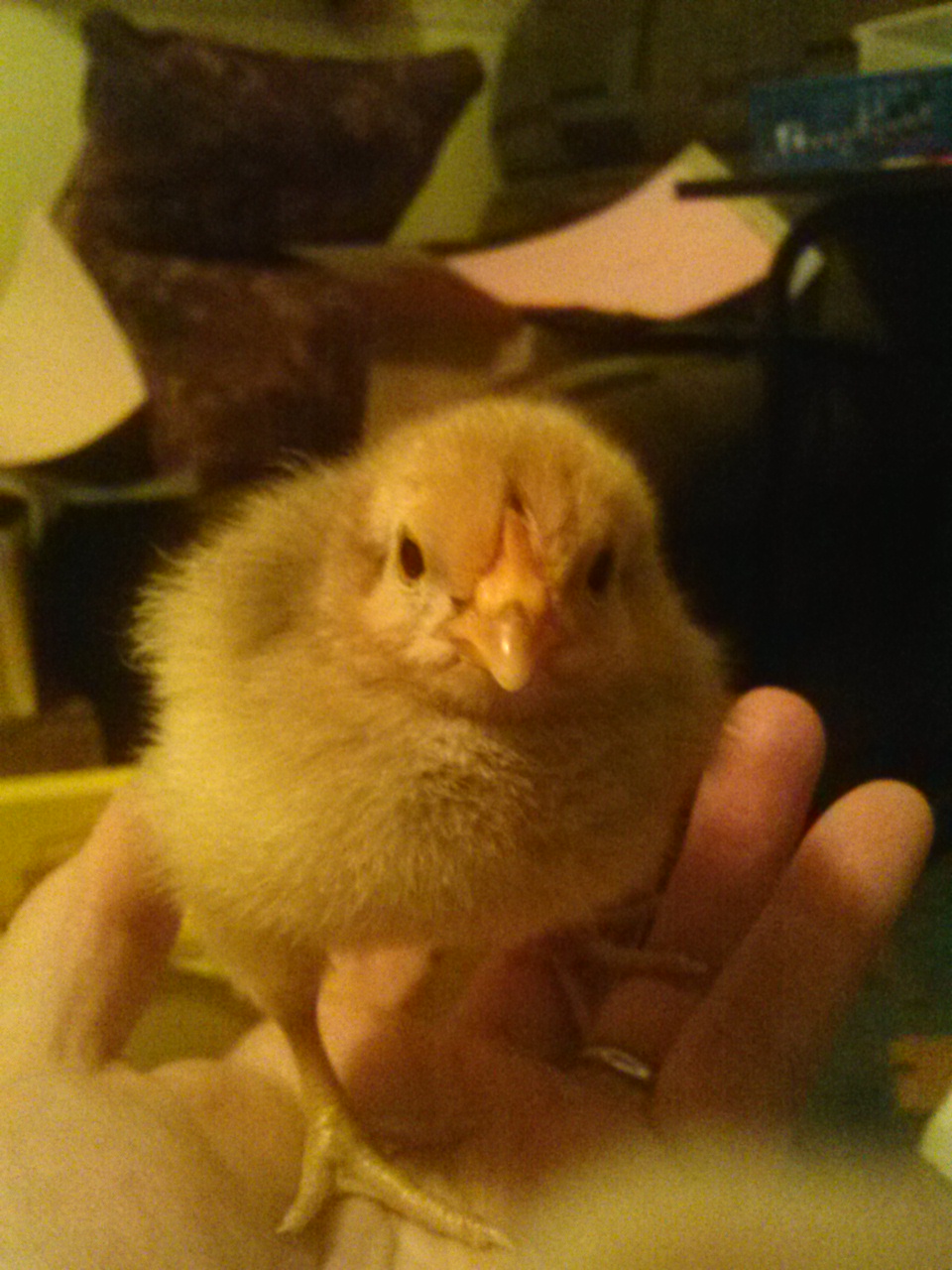
Our six little chicks are growing up.  They have changed a whole lot in their three weeks of life.  I’m really excited to see their coloring change – some have changed in unexpected ways. I’m sure they will change a lot more as they grow up too. I’ll have to wait to see what kind of chickens they are (and what gender they are) until they are almost or fully adults.  Here are their updates, along with pictures of when I first got them, so you can see the difference three weeks makes.

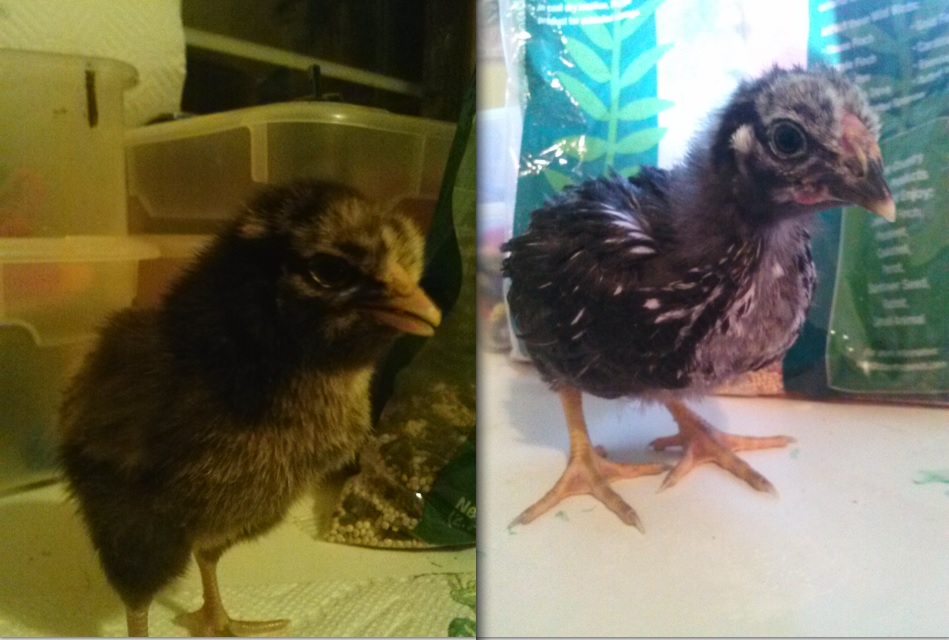
blondie
I thought this guy would end up being all white, but he is getting some black in her/his feathers, and also now has a black spot on his beak.
black chick
Here’s our little black chick, starting to get more white in his coloring.
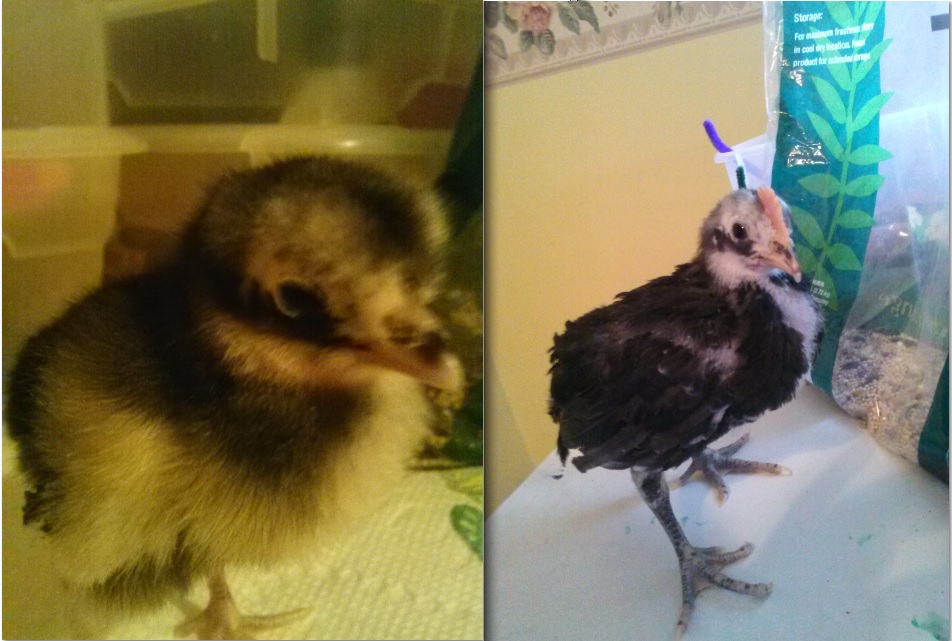
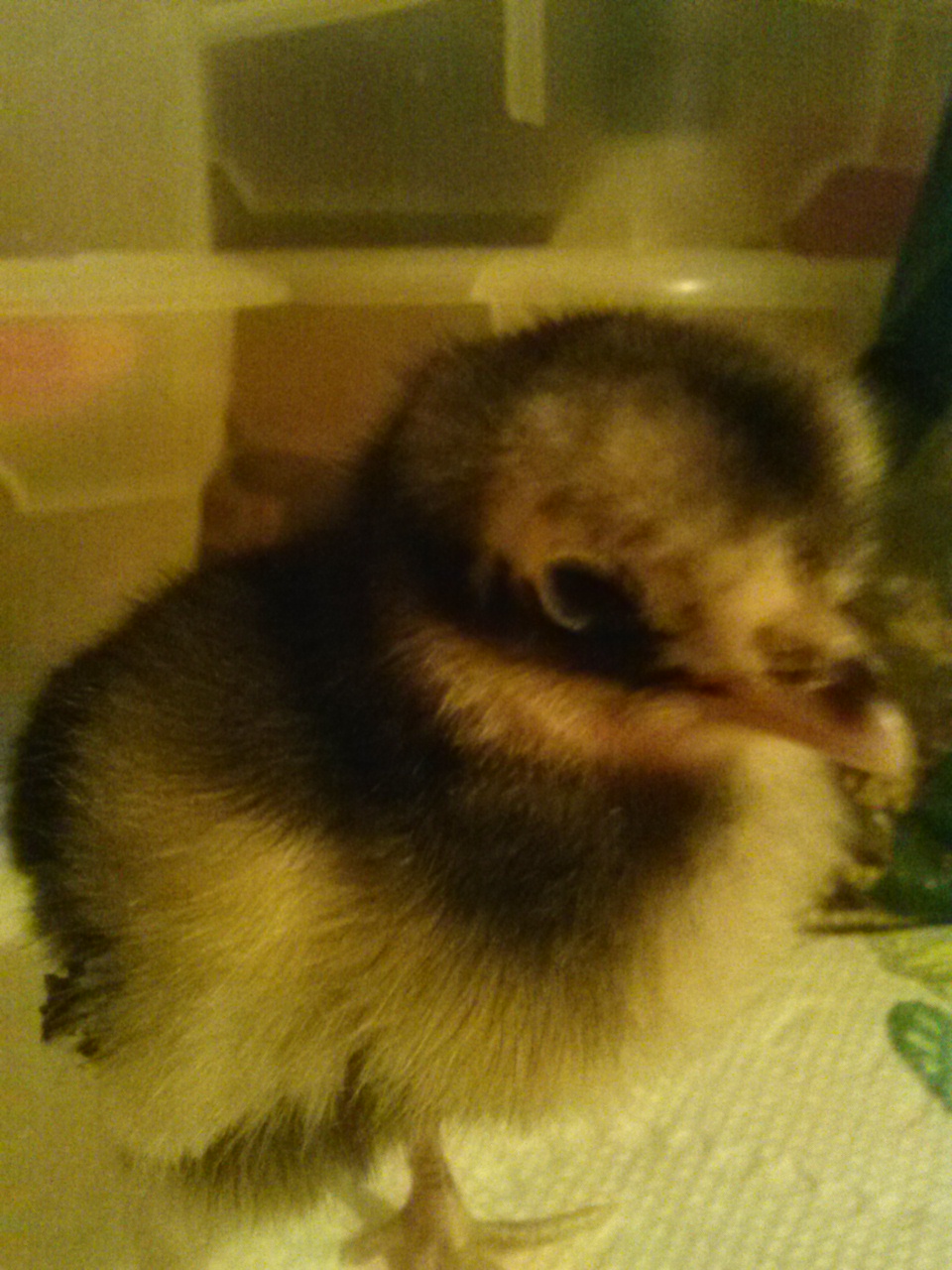
black and white spotted face
This little guy already has a comb, which may mean he’s a rooster. Combs can be deceiving though. He looks like he’s wearing a vest from the front now, and his legs are dark and splotchy – I’m wondering if he’s some kind of Maran (copper maran or other). That is just a wild guess though.
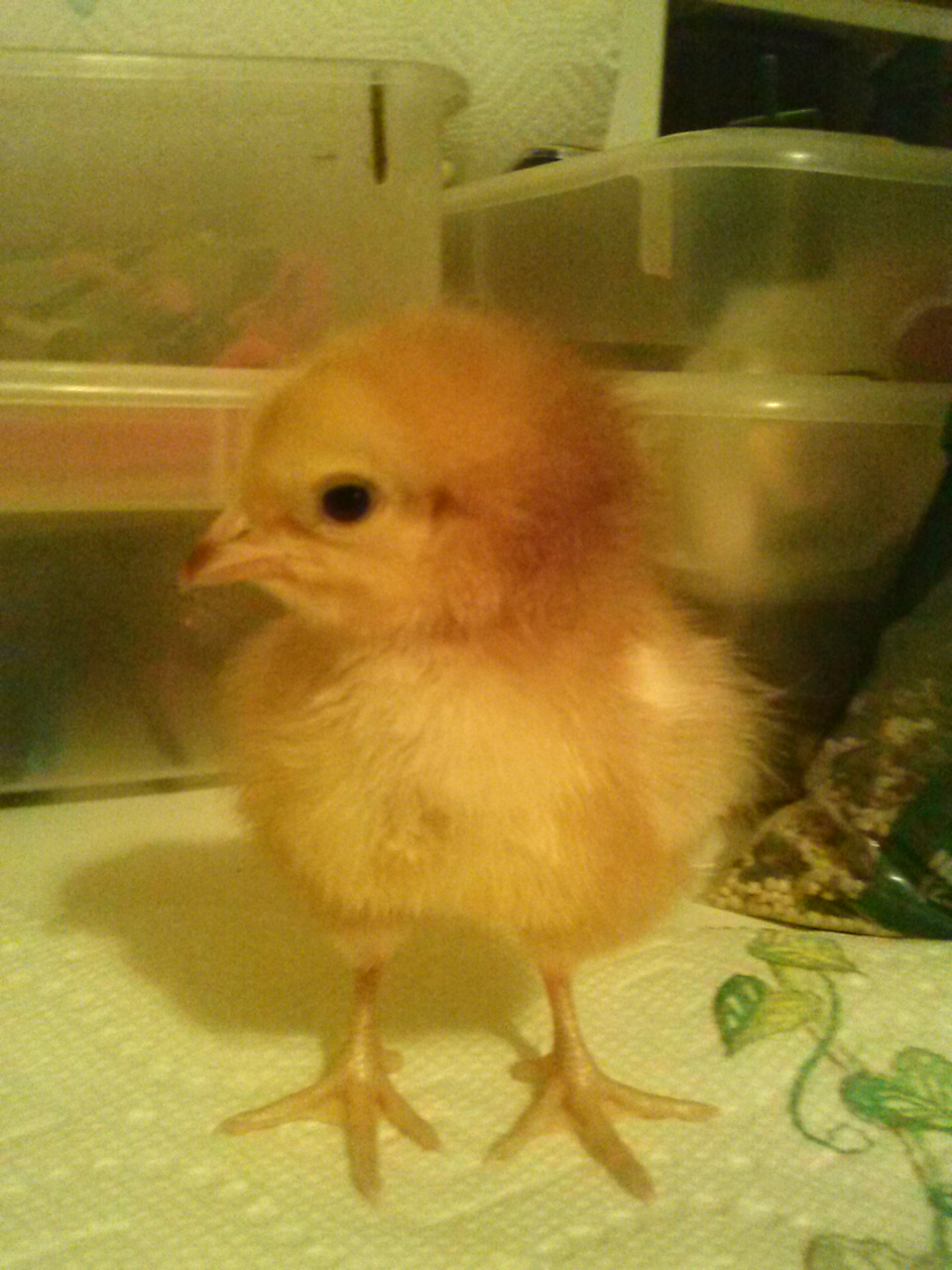
orangie
Our little orange chick – now getting some brown in her feathers.
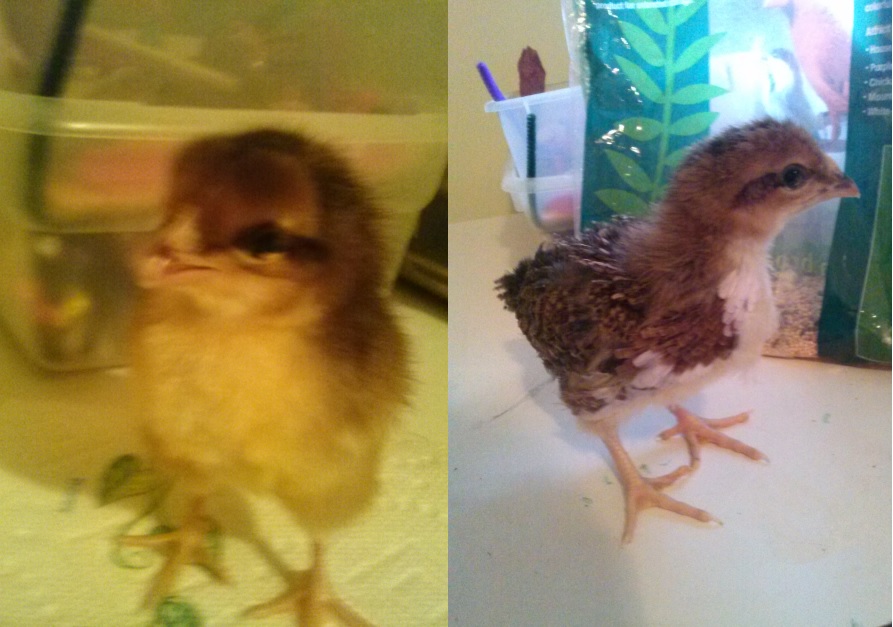
mask face
Little mask face – now has brown/black speckles in her feathers, so I think she/he will be a speckled chicken. But it’s really too early to tell for sure – they may change a lot before adulthood.
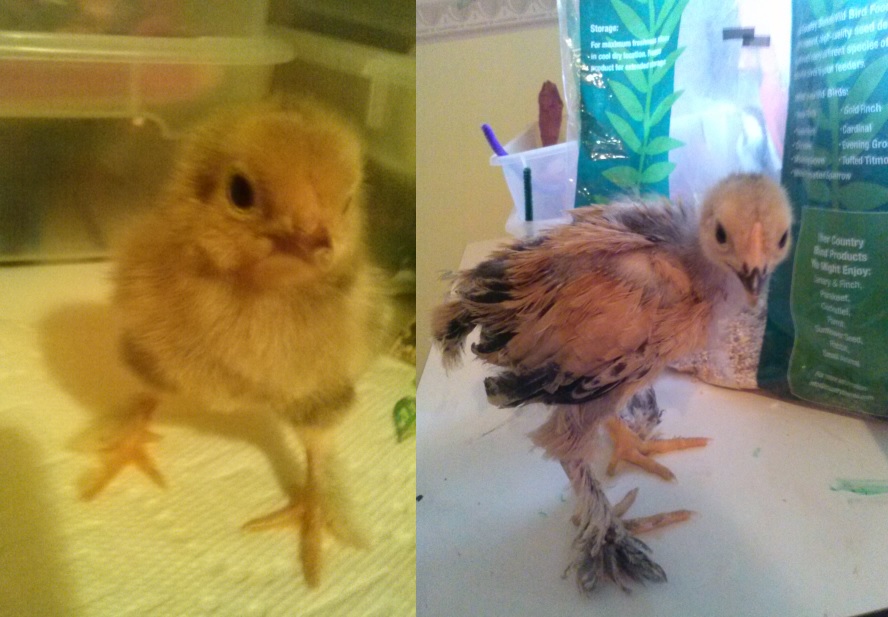
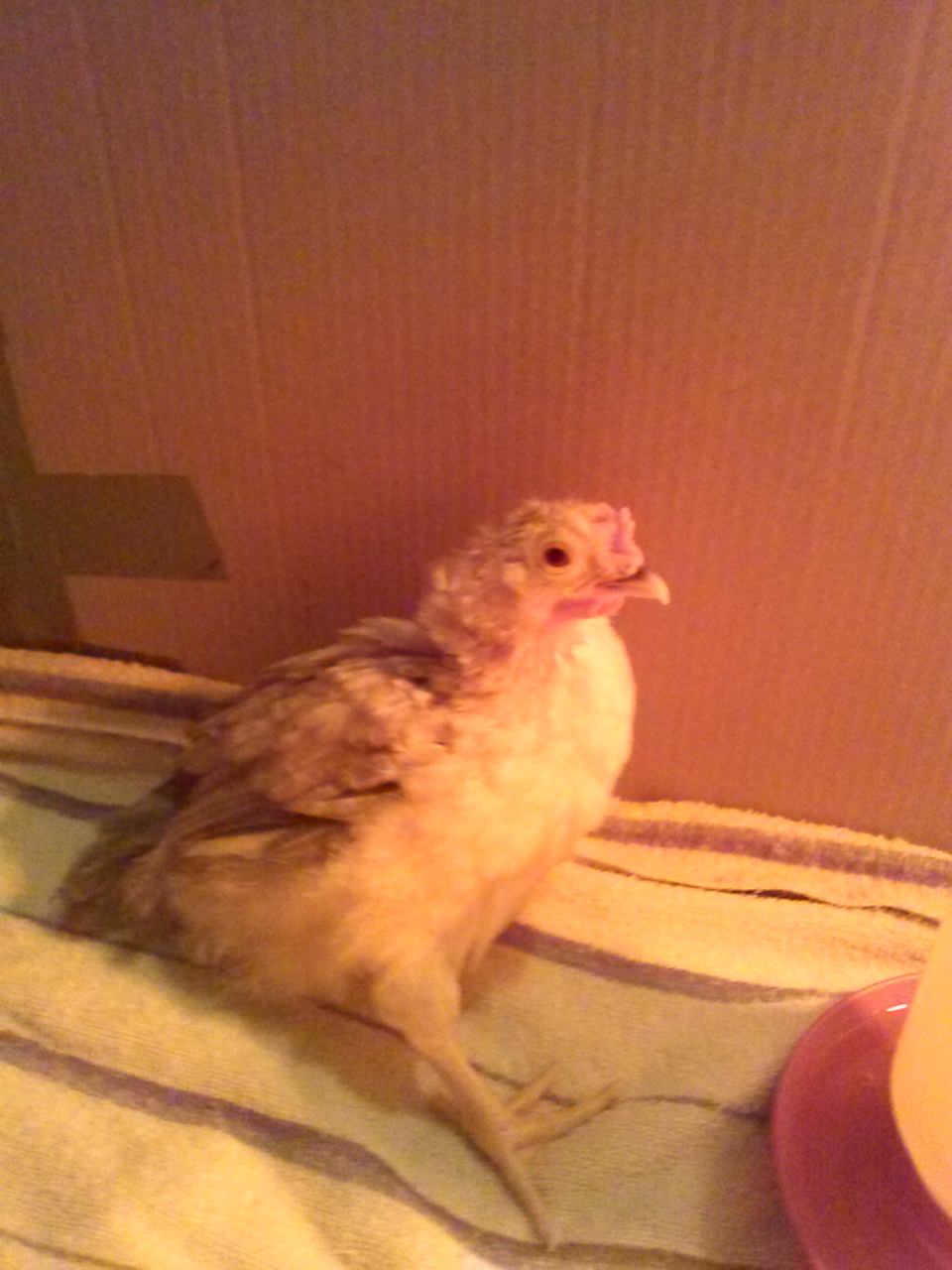
fighter fuzzy boots
Here’s the feather booted, strong-will-to-live chick. As you can see the feathers on her legs are getting really fluffy. I really like how they look. Her coloring is really nice too – she’s getting some black in her feathers, and a small comb is forming.

I’m really enjoying watching them grow.  I will be getting the replacements for their fallen brethren around April 20th, so I will have even more chicks to watch grow up at that point.  Some day my spare bedroom will stop being a chicken nursery.  Until then, this is pretty fun.

Beginnings of Spring

We’ve had a decent amount of warmer, above-freezing temps for the last couple weeks, and it made a lot of our snow melt.  Today, I found these crocuses just starting:

crocuses arriving
Crocus Leaves

Hopefully they’ll flower within the next week or so.

crocus leaves
More crocuses coming up

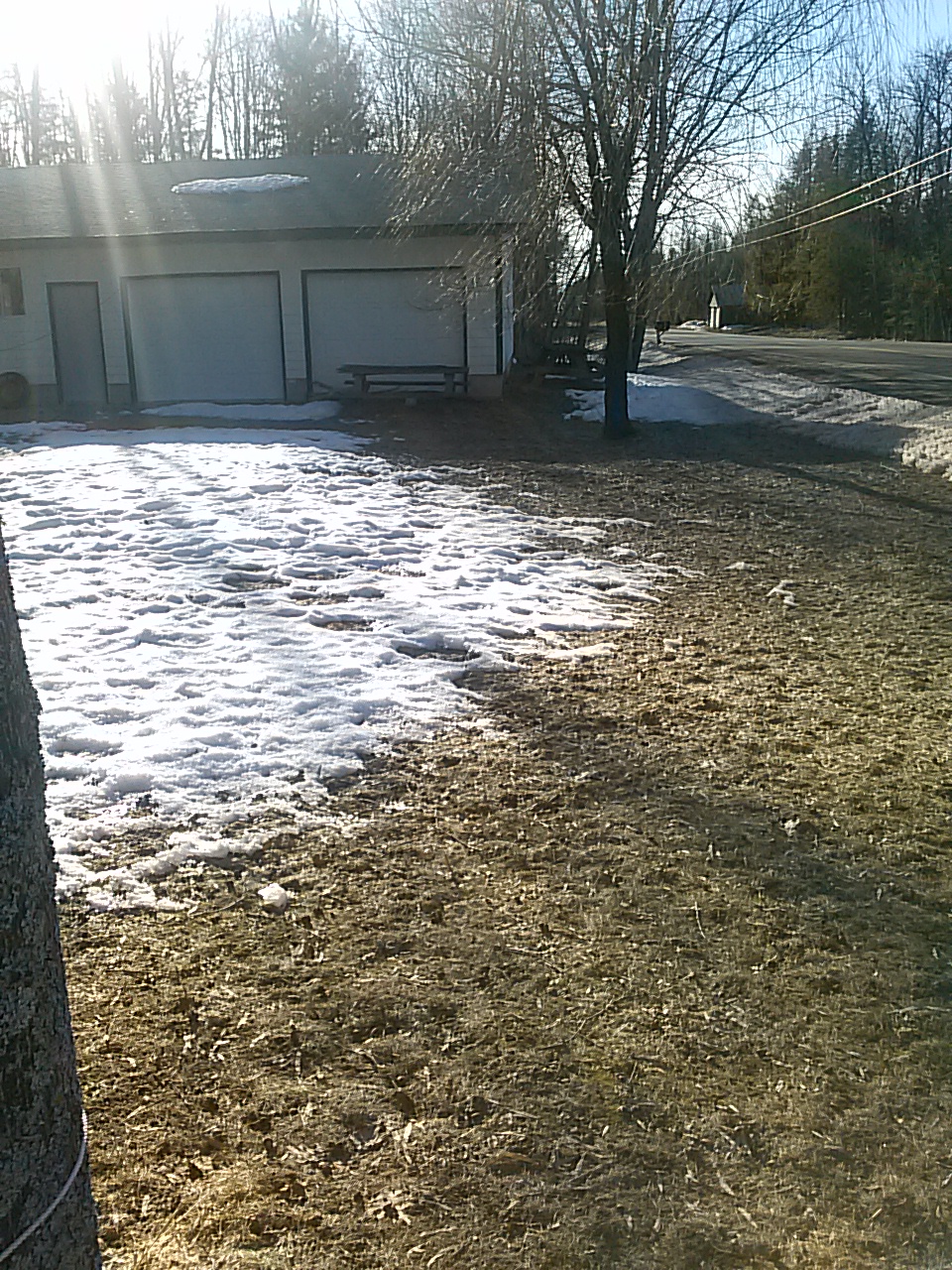
Our yard still has a lot of snow, especially where we have snowbanks.  Today it was in the 20s, but the sun was shining.   We at least can now see big chunks of our yard:

Part of our yard
A view of our front porch and side yard
Our front yard
Our front yard near the road

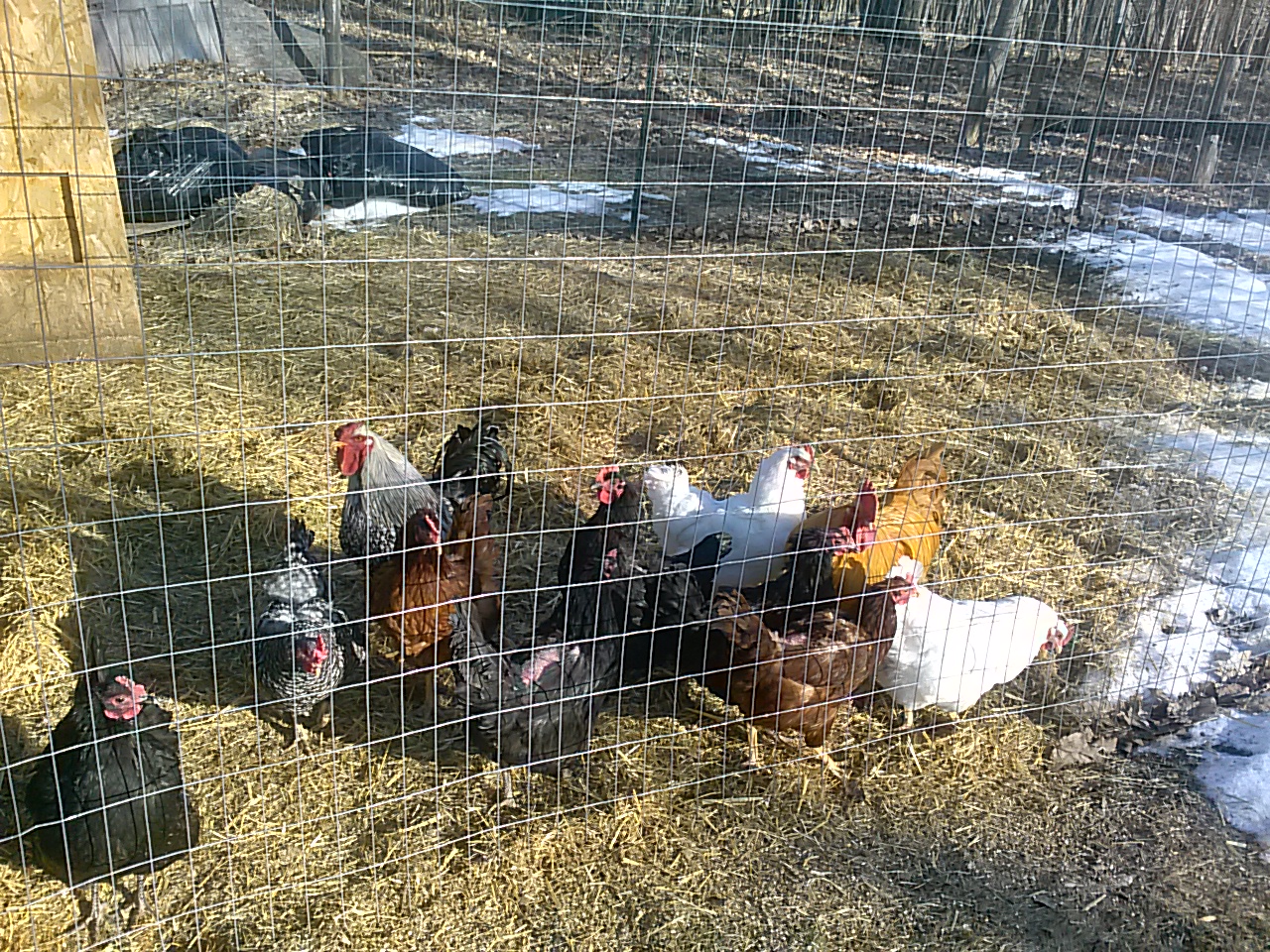
My chicken flock has been happy with the weather turn also.  When it was really cold there were days they were stuck inside, but if it was a nice day we’d open just their small chicken door.  With the spring weather, we’ve been opening up the big door to their run.

chickens
The chicken flock

There is still a bit of snow out in their yard.  We had been putting their old bedding out there in bags through the winter, with the plan being to heave the bags over the fence for the compost pile in the spring.  (Yes, we have some chicken yard access issues – you can only enter through the chicken coop – that will be fixed this summer).  Last week the chickens got into a couple of the bags and spread the old bedding around their yard. I was not looking forward to cleaning all that straw and hay up, but then I figured we should leave it where they put it –   It sounds a bit gross, but considering that the yard is dirt (they ate all the vegetation last year), it keeps it from turning into a big mud pile.

chickens 2
The chickens in their yard enjoying the sunshine.

In the two pics above, you can see the other bags (that we were able to heave over the fence before they got into them) behind them.  My compost pile is conveniently located right behind their yard.

I’m glad that it’s finally starting to be spring.

Hard lessons of farming (An homage to Peepers)

Peepers in early March

Sometimes on a farm you have to make hard decisions.   This weekend we made a really hard decision.  If you’ve been reading my posts, you know that Peepers had some leg problems.  I didn’t discover them until it was too late to do anything about them (IF I had been able to do anything at all).  We thought that she would be ok, because for a while she was able to get around on them fine, but as she grew larger, her body weight was too much for her legs.  (if she was a girl – I still have no idea).  The last several days she was also panting a lot, and I noticed that she was using her beak to help her move around, and she would also  flap her wings trying to move around.  One leg was splayed out almost completely behind her, with the foot on that leg also being misshapen – it was I think what they call “duckfoot.”  She couldn’t put that foot down completely to push her body so that the other leg could help her move.

When we first got the other chicks, a couple weeks ago, seeing them running around made me realize just HOW disabled she was.  I agonized over the best thing to do for her, and then we decided to just wait.  We decided to not make a decision about her for the time being, because we thought she was enjoying her life.  But for most of last week, we could tell she was just very frustrated, and possibly in pain.

We tried thinking of other solutions – maybe housing her away from the other chickens later – since putting her with them would be cruel – they would just peck her to death because of her disability.  We thought about keeping her in the house, but she would have had to have a chicken diaper; and  probably be caged, to keep her safe from our dogs, and also because she really couldn’t move around anymore.  I think that as she grew bigger it would just get worse and eventually she wouldn’t be able to move at all.  We thought about giving her to other people, but like I said she’d end up being caged, and that is not the life I wanted for her.

We decided on Saturday night that the nicest thing for her would be to humanely end her suffering.  We did it as quickly and humanely as possible.  And it was very hard to do, emotionally, because I’d bonded with her.   As a farmer, (or budding farmer), I need to get over the emotional attachment thing.  The case with Peepers, as opposed to my other chickens, was a lot different because she’d been alone for so long, and I had hand raised her.  When I think of my other chickens (both the adults and the new chicks), there isn’t that bond there because they have each other.  To me they are all just “the chickens,” they don’t have names, they aren’t pets.  I didn’t mean to get that attached to her, but I did.  I don’t know if the bond went both ways, but I was attached to her.  I don’t raise my chickens specifically for meat, but at some point I’ll have to cull some for meat and/or to thin the herd, remove mean roosters, etc.   I can’t get attached to them.  I feel really bad but I think this was the best thing we could have done for her.

She was a great little chicken.  She got to live a comfortable life for her two months that she was here (or as comfortable as I could make it).  She had a really cool personality.  I am very sad that it had to end this way, but I think it was for the best.

RIP Peepers. You will be missed.

* And if you are wondering, no we did not eat her.  Even if she had been big enough, we would not have.

Introducing the new chicks

I received my chicks yesterday.  They were shipped on Monday, and the two day journey in freezing temps was not good – the place I ordered from has a 15 chick minimum right now, until the end of March, for a very good reason – it’s meant to help them keep warm on the journey (more chicks = more body heat). They had a heat pack, and there were 16 chicks in my box.  I got a call from the post office on Wednesday, and they said the chicks had arrived, but only 2 were alive.  I ran to the post office, and there were two visibly alive – everyone else looked to be dead.  The postal trucks are not heated at all.

I ran them back to my office, and immediately put a heat lamp on them.  Over the next couple of hours, 6 more of them woke up –  so total of 8 alive, and 8 had died.  I talked to the company I ordered from, and they said to call them back on Friday with the final total, just in case any more didn’t make it.

I brought the 8 survivors home, and they all seemed to be doing well, until late last night.  I noticed one little guy had one eye shut, and his peeping seemed to be weak.  I went to bed, and had a dream that he had died (in my dream he was a little penguin, which I think is because I thought he looked like a penguin – he was a little black and white chick) – I woke up today and sure enough, he had died in the night.  One other little orange guy was acting weak this morning, so I didn’t think he would make it either.  About an hour later, just before leaving for work, I went to check on them and he had died as well.

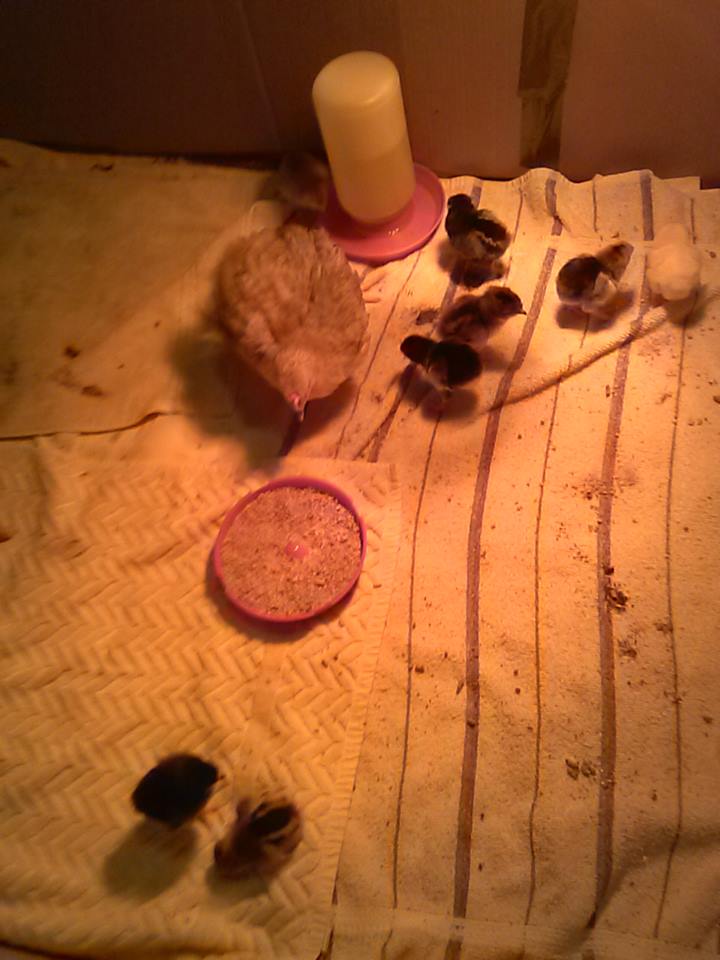
I now have 6 chicks. They seem to be doing really well, everyone is eating and drinking well, and running around in their giant box.  They are getting along well with Peepers, although that was a little touch and go at first.  Luckily, poor Peepers can’t really move very fast due to his/her crippled legs, so they aren’t in much danger.  They like to run up to her, peck at her feet, and then run away.  (I’ve found myself calling Peepers a “she” lately instead of a “he” although I still have absolutely no idea what she/he is).  One chick kind of nuzzled under her for a bit today.

So anyway, here are the surviving chicks (as of tonight):

fighter
We’ll call this guy “Fighter” – the most strong willed of them all – he was the most awake when the box arrived, walking on top of everyone and pecking them all as if to say “wake up!” He also has fluffy feathered legs.
Little Yellow guy
Little Yellow guy – he is just SO cute.
spotted face
Little spotted “penguin” looking chick – this one has funny diagonal stripes on his face.
orange
Orange guy – this was the other Awake one when the box came.
This one has an orange / brown mask on his eyes, and has a cool brown skunk-like stripe down his back.
black
Little black chick – this one has a black and white skunk-like stripe down his back.

I’ll have to see about getting the replacements for the losses sent in a month or so, when it’s warmer so that I don’t lose them as well.  For now, these guys are doing well and are a lot of fun to watch.

The chicks in their new home with Peepers.
The chicks in their new home with Peepers. (Taken last night when there were still 8).

The chick corral

My new chicks are due to arrive this coming week.  I’ve been trying to figure out how I will house them together with Peepers.  He is probably about 4x the size that the new chicks will be, and he’s quickly outgrown the small box I originally had him in.  I originally thought about using a giant plastic bin – we have one, but it is somewhere out in the garage I believe, and possibly filled with stuff at the moment. Our garage is kind of a pain to get to in the winter – My dad built it to house his tractor, and didn’t actually put it near the driveway, so we need to trudge through knee deep snow to get to it.  I also was thinking that, since it’s only early March now, I will probably need a bit more space because the chickens will be pretty big by the time it’s warm enough to put them outside with the adults.

I saw some designs online that people had made for indoor brooders.  One person got some large furniture/refrigerator boxes and put them together to make a brooder.  I tried asking our local furniture store for some boxes, but they were out of cardboard (someone had taken all their cardboard away the very day I asked).  So then I asked at our local grocery store, and they had some boxes.  I went and got 8 or 9 large boxes that had been for paper towels and things.

I brought them home and started building them into a large box shape:

Large box shape for brooder

I then reinforced the sides, and added cardboard on the bottom to make the floor.  The chick corral / brooder is all put together with duck tape.

CAM00877

It comes out to roughly about 4′ x 2.5′  – a decent size, and should keep the chickens happy for awhile as they grow.  I have extra cardboard to make the sides taller later on as needed.  I will probably need this because otherwise I’ll eventually find them perching on the top and hanging out in the room where the brooder is.  When I had my last batch of chicks (my current adult population), by about 2-3 months they were already doing that.  I was worried about them living outside but soon after they started escaping their brooder I knew it was time for them to go to their coop – plus it was summertime.

The brooder is in a carpeted room (my art room which is actually an old bedroom).  I had a large thick plastic tarp that I put underneath the whole brooder just to keep the carpet from getting dirty.  I had to think for awhile on how to do the flooring/bedding for the chickens.  Last time I used newspaper as their bedding with no problem, but I’ve since read that newspaper can get slippery and cause leg problems in developing chicks.   I also had to think about Peepers.  Peepers has a wonky leg – I think it was caused by the temperature fluctuations from the incubator going bad mid-incubation.  That can cause a condition called splay leg in chicks.  I didn’t notice his problem right away, because it was just one leg.  Over the first couple weeks he started pushing one leg out and now it sometimes is almost behind him when he walks.  This can be a fixable condition if caught and fixed within the first few days after hatching, but he was already a few weeks old when I found out what the condition was called and how to fix it.  I tried using a bandage method to “train” the leg to do what it’s supposed to, but it just seemed to hurt him and I didn’t want him falling in his water or anything, so I stopped trying to fix it.  He gets around ok, but he needs a surface with better grip.  I’ve found that really good quality paper towel seems to be ok for him, so that is what I lined the brooder with. Carpet is actually better – I bring him out on the carpet to hang out sometimes, and he gets around fine on that, but chickens poop wherever, whenever, so for the brooder I need something I can take out and replace frequently.

new brooder
Peepers in the new brooder.

I may use some old towels for him if he starts having problems with the paper towels.  That way I can take them out and wash and replace them each day.  The new chicks should have no problem with the paper towels.  I tried some pine shavings with Peepers last week, because I read that those can make a good bedding, but it was very messy and it didn’t seem to give him enough of a grip to get around.  I think as he reaches adulthood he should be fine – he will always be crippled so he wouldn’t be able to get away from a predator, but as long as he’s kept safe he’ll be ok.   I put him in the brooder and he has a new heat lamp I set up in there, and he started making these little cute noises, almost like song bird noises.  I could tell he was very happy in the new box.

Happy Peepers.
Happy Peepers.

Adding chicks (friends for Peepers)

Peepers Feb 13th
Peepers Feb 13th

Our plan was to get a new incubator and hatch some more eggs.  We wanted another batch quickly because I worry about Peepers being all alone.  I was going to save all the eggs from this weekend, buy an incubator this weekend, and start some new eggs tonight.

Thursday night I was washing some eggs, and I realized that the shells have gotten a bit thinner lately, because one broke while I was washing it.  They are usually pretty thick – when you crack them to cook, it takes a couple of hits to crack them.   Thin shells means the hens aren’t getting enough calcium.  We’ve been giving them corn along with their regular layer crumble because  it’s been super cold here lately –  the process of digesting corn helps the chickens stay warm.  It seems like they’re eating more corn and not enough layer food.   I have some oyster shell calcium and am now supplementing them with that to up their calcium intake.

A big problem with thin eggs, in terms of trying to raise chicks from them, is that they aren’t usually very viable.  They are more permeable to bacteria and stuff that aren’t so great for chicks.  I was worried that it may take a while for the eggs to get a little thicker, longer than I wanted to wait to start incubating a batch.

I decided for now to not get an incubator, and instead order some day old chicks.  I ended up ordering 15 chicks, straight run (which means they don’t sex them), and they will come the week of March 2nd.  That’s at least 2 weeks before they would have hatched had we started an incubator tonight.  The place I ordered from, mypetchicken.com, had a cool “Rare Breeds Assortment” which consists of extra chicks from their hatches of rarer breeds.   They have around 30 or so different breeds that may end up in our batch, so it will be a surprise.  They are all good egg laying breeds, and some are even different colored egg layers (blue eggs, dark chocolate eggs, olive eggs).   We will probably end up with some roosters, so we’ll have to figure out what to do with them all eventually, but I think everything will be good.

We are very excited to get our new chicks!

Attempt at chicken fodder

I’ve been reading a lot about fodder systems lately for livestock feed – essentially you have a setup where you sprout a lot of seeds of barley or some other food grain, and it grows mats of grasses for the animals to eat.  There are some big farms that have larger scale fodder systems, and some people have set up diy fodder systems that seem to work well.  I don’t have a lot of space at the moment, but I wanted to see how this would work for my chickens. I started with a large plastic food container, and I also have a seed sprouter (for sprouting alfalfa and bean sprouts) that I figured I’d use.  I bought the sprouter several years ago, and some seeds to sprout, but then never actually grew the sprouts.  So I had a lot of seed to work with.  In the large plastic container I threw some bird seed that our wild birds outside want nothing to do with (they are picky and will only eat black sunflower seed).

My container with birdseed to sprout
Seed sprouter
Seed sprouter

I wasn’t sure if the chickens would really be interested in this – usually they’ll eat anything though, so I figured it was worth a try.  One of the seed trays from the sprouter ended up having large sprouts right away – they weren’t growing in a mat yet, so I dumped them into a little plastic container and just set that on the floor of the chicken house. They went nuts for it.  I’m still growing the large container, it has some sprouts but is not yet a mat of sprouts.  You need to rinse the seeds/sprouts in cold water a couple times daily to keep mold from forming and to keep the sprouts healthy. I don’t have holes in that container, I just swish some water in and slowly dump it out, so I don’t know that it will actually grow into a mat since they swish around so much.   I’m getting a lot of sprouts though, it should be ready in a couple days.

tiny sprouts
tiny sprouts

My other tray from my seed sprouter should be ready pretty quickly too:

These are lentil sprouts

I’ll have to see if the chickens like the rest of these – if so I’ll try to devise a better system later this spring.  There are tons of diy fodder system ideas on the internet.  The best way would be to have bigger trays with holes for water to drain, and several trays going so that you always have fodder.  If I can get a system going this works for rabbits and other animals too – I’ve seen online where some people feed their goats and cows from sprouted fodder. I’d love to be able to grow most of my animal feed on my own instead of buying bags of feed all the time, or at least be able to cut down on store-bought feed.

Keeping farm logs

A giant sunflower
A giant sunflower (grown in 2013 at a previous house).

It’s a good idea to keep records of things.  With our minifarm, we started keeping logs right from the beginning – I got the idea from my aunt and uncle.  They have a huge garden each year, and they keep records of their harvests of each vegetable they grow.  That way they can compare harvests from year to year.

Since 2014 was our first year here, our garden wasn’t that large yet, but I kept a harvest log.  Each time I’d pick something, say zucchini or cucumbers, I’d keep a tally of how many I got.  For this first year I just tracked individual items – for instance, I got 49 tomatoes, and 132 green beans.  Hopefully this next summer I’ll start tracking pounds or bushels or something – I hope to get a lot more beans this year.

Keeping track of harvests can show you where you had problems – either you need to grow more the next year, or there may be something that didn’t do so well and you can decide if you just need to adjust things, or if it just won’t grow in your garden.  For example, I tried to grow Swiss Chard in pots on my front porch.  We didn’t get much chard – there is some afternoon sun that would hit them, but they needed to be watered all the time.  We get a lot of rain here but the rain couldn’t get to them because of the porch overhang.  So next year, I will grow it in a new garden bed I’m planning.  I also grew a few cabbage plants last year.  We like cabbage on occasion, but it’s not my family’s favorite vegetable anyway.  Which is good because cabbage moths laid eggs all over them.  I was picking off cabbage worms from each plant, and they had devastated a few before I realized what was happening.  I fed the cabbage worms to my lizard and the chickens. They all loved them.  And then the cabbages ended up going to the chickens as well since they were pretty gross.  I won’t be growing cabbage this year.  If I grow any of that family, I’ll need to use row covers to keep the moths off and also move them somewhere else in case there are eggs still in the soil.  I noted all this in my garden log.  That way I don’t forget in a few years and then try to grow cabbage (or brocolli or any other brassica) without a plan.

I keep my farm / garden log in a big 3 ring binder.  I put notes about the plants, and about weather, and about different things I wanted to remember about the season. I noted when we got our first hard frost, and I’ll note when we finally get rid of the snow this year.  When I find good articles about farming or gardening that I want to keep I’ll print them and put them in there.  I also have my 2015 garden planned out in there.  I got some graph paper and used that to plan a new garden bed and also to expand the one I used last year.

Another good thing to keep track of with my chickens is their egg production.  I started keeping track from the first egg they laid on October 19th.  We got 338 eggs in 2014.  Just from my 9 hens, in less than 4 months.  Keeping track of eggs can help you realize where you’re breaking even, or if you are actually making a profit from your eggs.  Even if you don’t sell any, you should make a “profit” against your food costs, by not having to buy them at the store anymore.   With our food costs we still made a small “profit.”  Good thing my family loves eggs.  I also note when the eggs are laid in weird spots, or if we have a broody hen, or once when we had a couple of eggs with thin shells.

Keeping a garden or farm log is a smart idea, and helps you keep track of what worked and what didn’t from year to year.

Peepers the lone chick

My chick Peepers
My chick Peepers

We wanted to get more chickens. My uncle gave me a really old incubator, that I believe was my Grandma’s.  I remember her hatching chicks when I was a very small child, so this thing is very, very old.  We attempted to hatch 11 eggs, and started incubating them at the end of December.  A day later, we realized one of our hens was being broody – she was sitting in a nesting box and wouldn’t come out when we were in there, even for treats.  I found out she was sitting on 2 eggs.

Eggs take about 21 days to hatch.  Around day 15, our incubator stopped working – the temperature should be around 99 to 100 degrees, and it was at 70 degrees. I tried fiddling with it and couldn’t get it to work.  So I candled the eggs to see if there was anything in them, figured out 5 were empty, and took the other 6 eggs and put them under my broody hen.

On the 22nd day since I started the incubation, I went in the morning to feed the chickens and heard peeping under the hen.  I took her out and saw one completely opened shell, but no chick.  I looked around their coop and found a dead chick across the room – I don’t know if it fell out and the other chickens killed it, or if it died because it was cold, or what exactly happened (I know they moved it, because there is no way it would have moved there on its own at that age).  I went back to the nest box and found the peeping sound was coming from an egg that was pipping  – pipping is where the chick is just starting to come out – they’ve made a hole in the egg.  I didn’t want it to hatch and get killed so I didn’t want to leave it under her.  I took that egg, and left the rest in under the hen, since they didn’t show any signs of hatching yet.

I had set up a box for the chicks in my house, and I put that pipping egg in the box under a heat lamp.  I opened the shell a tiny bit more, but figured the chick needs to do it on their own, so I left the egg there. Then I had to leave for work.

That night, I got home and the chick hadn’t made any progress, and I was worried because it looked like the egg was drying to his (her?) body where the heat lamp had dried it.  I helped the chick out of the egg the rest of the way, and started rubbing him to wake him up more.  He peeped a bit and seemed to be alive and healthy, but still needing help. I was worried the heat lamp may not be warm enough, but my body temperature is about what an incubator should be so I just held him the rest of the night in my hand while he fluffed up. He was doing well by the end of the night, and would even drink a little water.

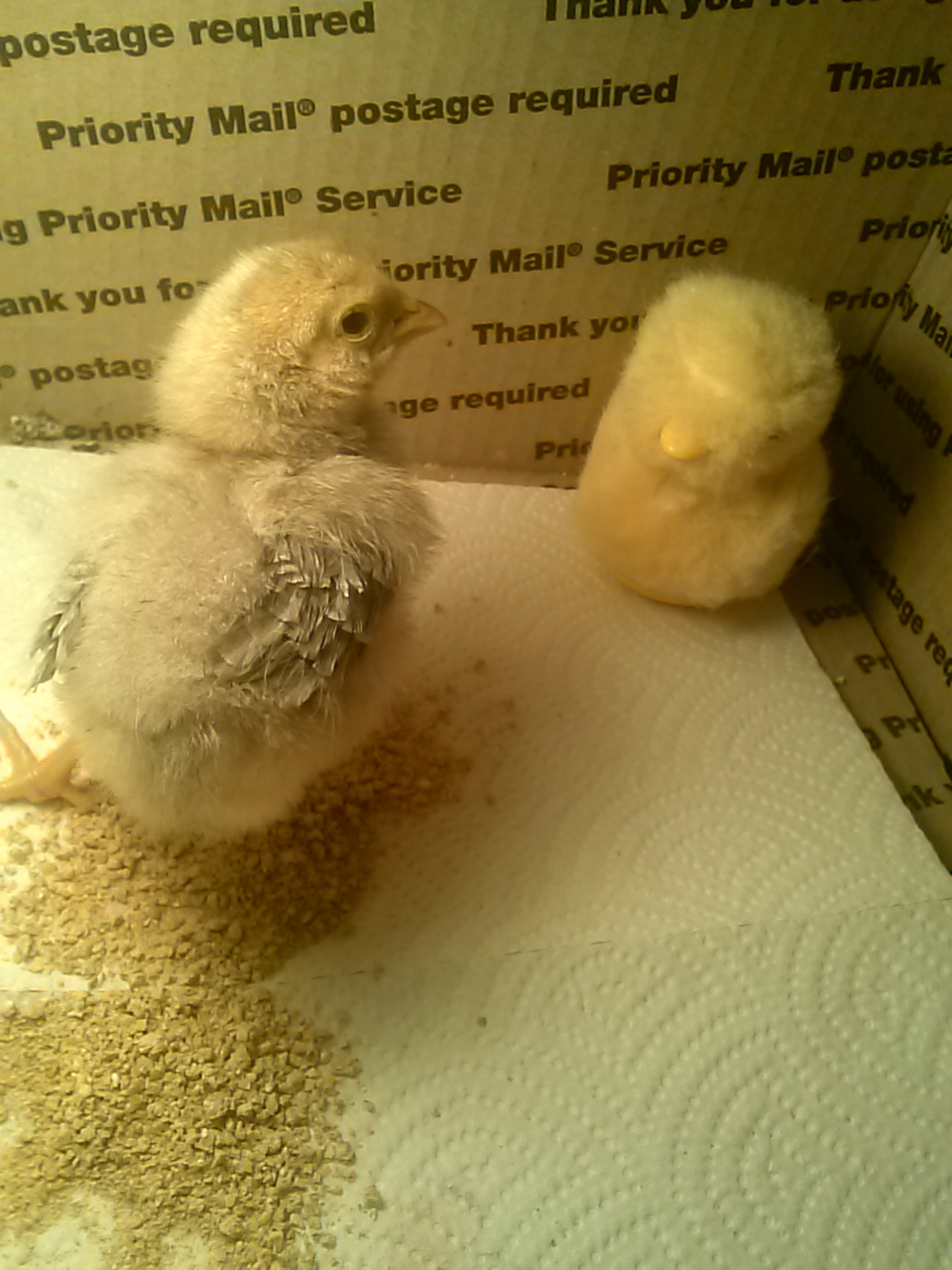
I named him Peepers.  None of the other eggs hatched, and a couple days later I opened them all to see – the two the hen had originally sat on were not fertilized, and all the others either had dead chicks in them or were half developed or just gross old eggs. So Peepers is all alone.  I have a toy chick in his box with him and he seems to like his “friend,” and he’s been growing well.  He’s now 2 weeks old.

Peepers and friend
Peepers and his toy chick friend.

I probably won’t know what sex Peepers is until he’s an adult. I found out a way to see based on length of wing feathers, but you have to look when they are a day old, and that has passed. I heard that at industrial chicken farms they squeeze the chicks to see what sex parts come out (I guess a rooster will have more of a nub or something) but I wouldn’t want to hurt him.  I’m hoping he’s actually a she, because I don’t really need another rooster, but we’ll see what happens.

We still would like more chickens, so we will need to buy a new incubator soon.  For now I just have my little pal Peepers.

Chickens!

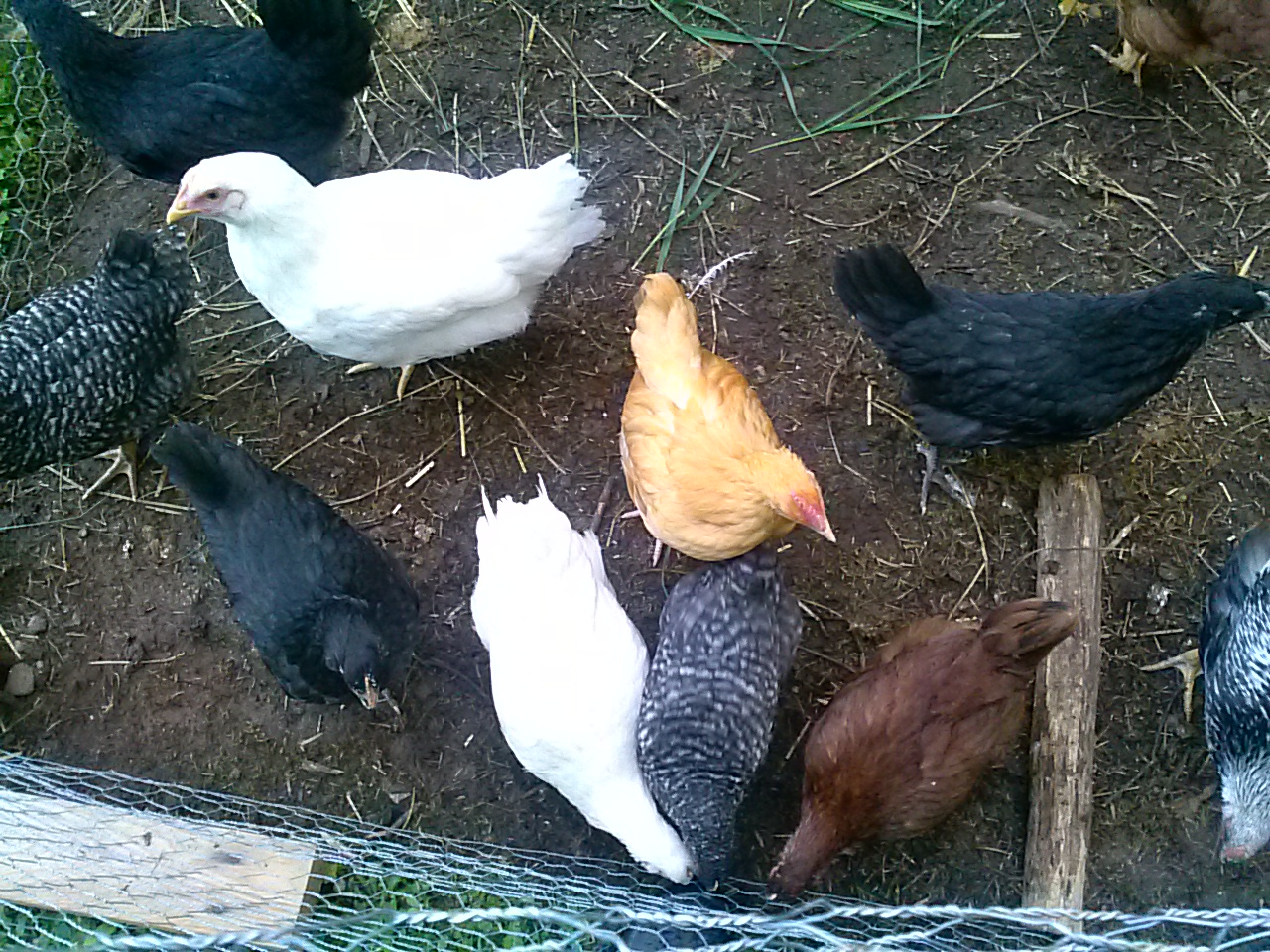
These are my chickens from summer 2014
These are my chickens from summer 2014 – curious about the camera.

I currently have 11 chickens.  Last summer we ordered some baby chicks.  I wanted a colorful mix so I got 2 Production Red, 2 white (maybe leghorns or Production White), four Black Australorps, and 2 Barred Rock (they are black and white speckled) hens.  For the roosters I wanted something completely different, so I got a Silver Laced Wyandotte and a Buff Orpington.  The Buff is the orange chicken in the bottom of the picture above.  I lost one of my Barred Rock hens in November, she got sick and died suddenly, and we never really figured out what happened to her.  Luckily nobody else got sick.

We converted a sauna into a chicken coop for them.  We originally made a small 8×8 fence outside for them, but they destroyed the grass in about a week, so I figured they needed more room for foraging.  We currently have a 15×20 fenced enclosure for them.  Right now it’s winter so they haven’t been going outside.  Their coop has a full sized door for us to go through, and also a tiny chicken door.  On days when it’s warmer (above freezing and/or sunny) I open their tiny door for them, but they still won’t venture out in the snow.

chickens outside
Here are my chickens in their fenced enclosure, summer 2014. They weren’t quite full grown yet.

They are a lot of fun to watch.  I have them fenced in because I was worried about them getting eaten by something, or running into the road, which is about 50 yards away. They really don’t like to stray from the others much though; I’ve had a couple of escapees and I usually find them trying to get back into the enclosure. I saw a TV show recently where people had their chickens just hang out in the yard with them free-ranging, and I may try that a bit this next summer.  I thought I could have them come out when I’m outside to herd them up if needed.   We have dogs but they have their own fenced-in yard, so the chickens wouldn’t be in danger from them.  I’ll have to try it and see how they do.

I also want to try to fence a tiny bit of their enclosure in and grow them some lettuce, and then take the fence down for when the lettuce is ready. I may not have to do that if I can let them wander a bit – and the grass may grow back in their enclosure a bit if they are not always in there.

These guys give us a lot of eggs too.  Probably about 5-8 a day, even right now in February. I have a heat lamp on 24/7 in their coop just because I worry about them freezing, and that may be why they are laying so much even during winter.  We got the chicks in the beginning of June and didn’t get eggs until mid October, but they’ve been very prolific since. We love eggs so we’ve been eating most of them, but I have people asking me to sell them eggs, so we are planning on adding a few more hens, just to be able to sell eggs.